

Saturday, 18/04/2026 | 22:03 GMT+7


After nearly four decades of reform, Vietnam has emerged as a middle-income country and is pushing forward with industrialisation and modernisation. The nation's socio-economic development strategy for the 2021-2030 period set a target of achieving an average social labour productivity growth rate of at least 6.5% a year, marking a significant shift from quantity-based to quality-driven growth.
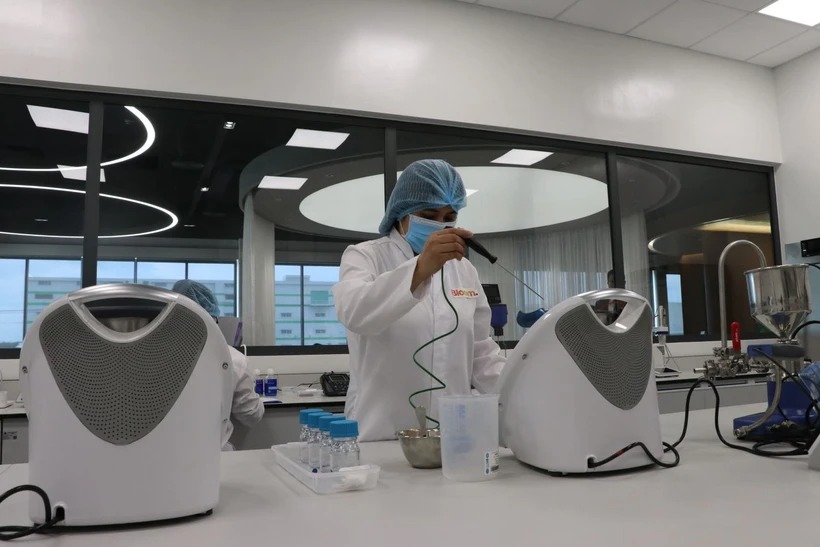
At Bloom., Vietnam's first-ever global innovation centre for the food and beverage (F&B) industry. (Photo: VNA)
According to Dr. Tran Hau Ngoc, Vice Chairman of the Commission for Standards, Metrology, and Quality of Vietnam, labour productivity is the decisive factor in determining the economy’s competitive edge amidst international integration and fierce competition.
Data from the commission’s Vietnam Productivity Institute revealed that while productivity growth slowed during 2020-2023 due to COVID-19 impacts and global political instability, Vietnam maintained an impressive average productivity growth rate of 5.6% annually from 2016 to 2023. This placed Vietnam among the leading nations in Asia for productivity growth, outpacing regional peers such as Singapore (3.3%), Malaysia (2.6%), Thailand (2.6%), the Republic of Korea (3.8%), and Japan (0.2%).
Dr. Indra Pradana Singawinata, Secretary-General of the Asian Productivity Organisation (APO), pointed out that Vietnam faces several challenges in its development process, including human resources shortages, limited management capacity, and modest R&D investment. However, he emphasises Vietnam's strong foundational advantages such as industrious population, political and social stability, and robust economic development trajectory until 2030 and 2045.
While acknowledging the country's significant progress in boosting labour productivity, Assoc. Prof. Dr. Vu Minh Khuong from the National University of Singapore warned that the current growth rate falls short of the nation's potential. He stated that without substantial acceleration in productivity growth, Vietnam will struggle to achieve the status of high-income nation by 2045.

Indra Pradana Singawinata suggested Vietnam capitalise on its advantages, build human resources development policies while enhancing connections between research agencies and enterprises regarding research and innovation activities. He stressed that the country should improve national productivity in accordance with the new situation, thereby penning effective support programmes.
Meanwhile, Ngoc said that the Government has issued and carried out multiple mechanisms, policies, strategies and plans to boost productivity, including the national programme to support businesses in improving productivity and product quality and the master plan for productivity improvement through science, technology, and innovation for 2021-2030. Besides, labour productivity is envisaged to become an important driver for rapid and sustainable growth under the national programme on improving labour productivity until 2030.
Most recently, the Politburo issued Resolution No. 57 on breakthroughs in science, technology, innovation, and national digital transformation, setting specific targets in increasing the total factor productivity (TFP) contribution to economic growth to over 55%.
With a view to achieving the target, it is necessary to strengthen institutional frameworks, Ngoc said, adding the draft law on standards and technical regulations and another bill on product quality will be submitted to the National Assembly for approval at its upcoming session./.
Source: VNA
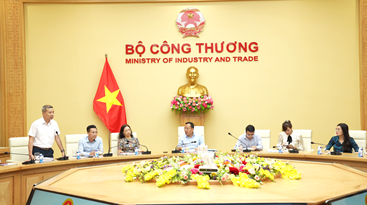
On the afternoon of May 22, 2025, in Hanoi, the Ministry of Industry and Trade convened a meeting of the Secretariat for the implementation of the Political Declaration on establishing the Just Energy Transition Partnership (JETP), chaired by Deputy Minister Nguyen Hoang Long.
23/05/2025



The ceremony to present the 'High-Quality Vietnamese Goods 2025' certification to 562 enterprises will officially take place in Ho Chi Minh City on March 25.
20/03/2025